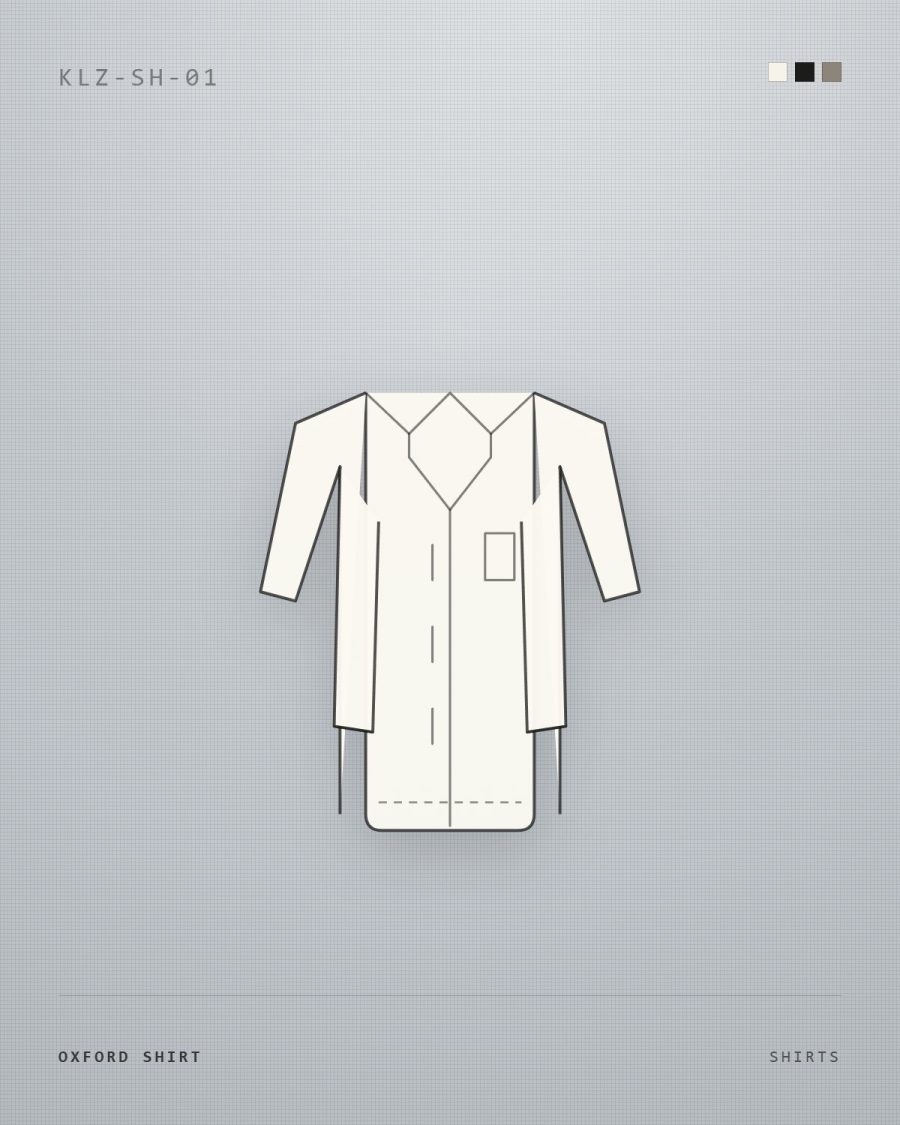
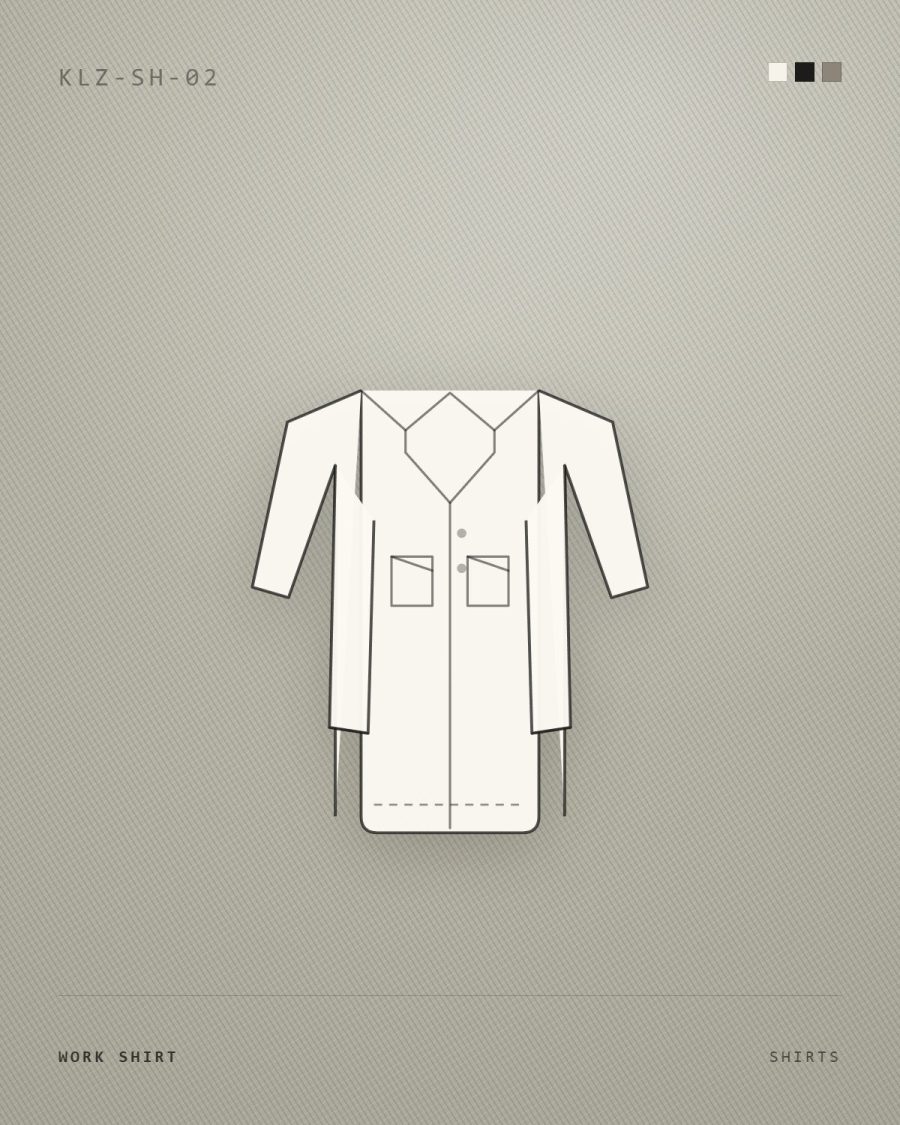
A work shirt carries the lines of a shirt with the seams of a utility garment: two chest pockets with flaps, a pencil slot, and a front placket cut wide enough to stay flat after washing. Side seams and armholes are double-needle stitched, pocket corners are bar-tacked, and the hem is squared rather than curved. A side-seam gusset or a utility loop can be added. Collar and cuffs follow the site brief, usually a two-piece collar and a button cuff.
Fabric follows the task. A cotton twill in a mid to heavy weight holds a crease and takes a print cleanly; a canvas or a cotton-poly blend resists abrasion where the shirt is worn as an outer layer. Color is matched to a Pantone chip or a supplied swatch, and dye lots are checked against the approved standard. Branding runs to a chest logo in embroidery, a back print in water-based ink, a sleeve hit in heat transfer, and reflective heat transfer where a site asks for it.
Send a tech pack or a shirt your team already wears, with the fit measurements and the points you check across the chest and shoulder. Note the pocket layout, the collar and cuff style, and any site requirement that affects the fabric or the trim. Attach the logo files with placement and size on each garment, the colorways, and the quantity per size. Include the packing method and the label copy. Sampling and fit approval follow.